
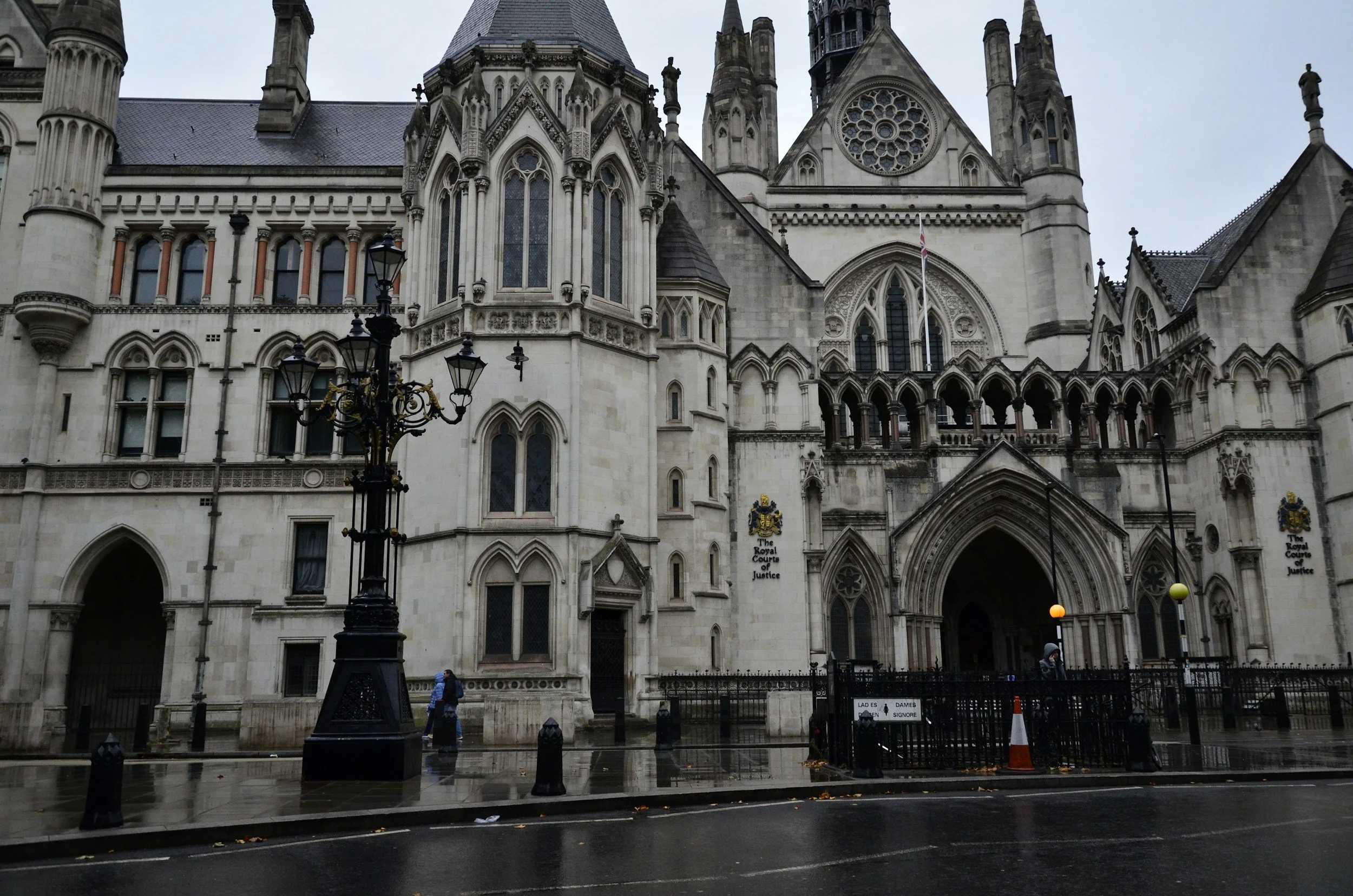
Prince Harry, Sir Elton John, Elizabeth Hurley & Ors ordered to pay £9.5m on account: why didn’t they just buy more cover?
After Prince Harry, Sir Elton John, Elizabeth Hurley and their fellow claimants were ordered to pay £9.5m on account of ANL’s costs, attention quickly turned to why their reported adverse costs cover would leave them exposed.

Tesla v InterDigital: a new FRAND claim, and an awkward funding question
The Supreme Court’s decision in Tesla v InterDigital & Avanci opens the door to challenges against global platform licensing rates. But where success means future royalty savings rather than a cash recovery, funding and insurance present a very different set of commercial questions.

The UPC's latest costs decisions: proportionality may protect you, but procedure will not
Two recent UPC decisions highlight the importance of proportionality and procedural precision. In KEEEX v Adobe, the Court limited a substantial request for additional security; in Niche Biomedical v ONWARD Medical, an application to exceed the recoverable-costs ceiling came too late. We explore the implications for costs exposure, liquidity planning and making the right application at the right time.

UPC security for costs: economic substance over labels
Recent UPC decisions highlight the Court’s approach to proportionate security for costs and the importance of clear, timely applications to increase recoverable-costs ceilings. We examine the implications for litigation planning and how appropriately structured adverse-costs insurance can help address security requirements.

The award is not the recovery: managing appeal risk after a large patent verdict
A substantial patent award does not guarantee recovery: post-trial motions and appeal may still reduce, overturn or significantly delay it. We consider how judgment preservation insurance and monetisation can help claimants manage that exposure, and why tighter market conditions make early advice and realistic expectations increasingly important.

Summer Case Law Watch
The summer has already produced several decisions with practical implications for litigation funding and insurance. From the CAT’s expectations around funding transparency to the priority of funding costs following a statutory moratorium. Here’s a quick round-up of UK cases.

The SRA’s new funding guidance highlights a step solicitors may be overlooking.
The SRA’s new litigation funding guidance may have a more significant implication than much of the early commentary suggests. The real question is not which funder to choose, but whether funding should be the starting point at all.

After the verdict: what remains possible in a tougher judgment preservation market?
A tougher judgment preservation market does not mean cover has disappeared, but it does mean plaintiffs need to approach insurers with a stronger, more disciplined appellate story. This blog looks at what recent reversals mean for post-verdict insurance, and what still makes a damages judgment attractive to the market.

TheJudge ranked Band 1 by Chambers & Partners for the seventh year running
We are delighted to share that TheJudge has once again been ranked Band 1 by Chambers & Partners for Litigation Insurance Brokers. This marks our seventh consecutive year ranked Band 1 — a milestone we are very proud of, and one we do not take for granted.

Litigation insurance is a capital allocation tool
Most discussions of litigation insurance focus on risk transfer. But for many corporate claimants, litigation insurance is increasingly serving a different purpose: helping boards and management teams make better capital allocation decisions around valuable legal assets.

Structuring ATE Premiums: Staged, Deferred & Contingent Models Compared
When comparing ATE policies, the headline premium is only part of the story. The way a premium is structured, particularly where litigation funding is also involved, can have a significant impact on the client's ultimate recovery and the overall economics of a claim.

TheJudge join the The Association of Litigation Funders of Australia
The team at TheJudge Global is delighted to have joined the The Association of Litigation Funders of Australia as an associate member.

Upfront Premiums v Contingent Premiums – finding the right mix.
Before deciding between upfront and contingent premiums, it’s worth comparing the true economics of each structure. The “cheapest” option on paper is often not the most cost-effective in practice, Robert Warner explains.

Timing Matters: Security for Costs and the Lessons from Harrington & Charles Trading
Security for costs applications remain a familiar risk for claimants—and a key area where funders and insurers often step in. A recent England & Wales case highlights that, beyond having coverage, the timing and sequencing of security arrangements can have significant cost implications.

Security for costs at the UPC after Syntorr v Arthrex
The UPC Court of Appeal in Syntorr v Arthrex held that properly structured ATE insurance with an anti‑avoidance endorsement (AAE) can fully satisfy the claimant’s “financial position” under Art. 69(4) UPCA / Rule 158.1 RoP, removing the need for costly security for costs deposits or guarantees. Robert Warner of TheJudge, who helped structure the insurance, highlighted that the decision preserves access to justice for capital‑constrained claimants while providing a court‑credible, cost‑effective alternative to traditional cash or bank‑guarantee security.

Closing Our 25th Year: Reflections on a Quarter Century in Litigation Insurance
This past year marked a significant milestone for TheJudge Group: 25 years dedicated exclusively to litigation risk insurance. As we close that year and step into our 26th, it’s a moment to pause and reflect on what a quarter century in this specialised market has taught us.

Contingency Fee Insurance: A 101 Introduction for Commercial Litigators
How U.S. commercial disputes teams can de-risk contingency work without losing the upside.

The Evolving Landscape of Litigation Funding & Insurance: What the next generation of disputes lawyers needs to know.
TheJudge’ Robert Warner shares some insights into what the next generation of lawyers in the UK need to know about litigation funding and insurance.

Insuring a Client’s Own Legal Costs: A Middle Ground Between Self-Funding and Litigation Funding
Clients who can afford to litigate are increasingly reluctant to leave substantial legal fees fully exposed to risk. This article explores how insuring a client’s own legal costs can offer a pragmatic middle ground between self-funding and litigation funding in high-value commercial disputes.

Litigation Insurance & Funding: Three UK Market Predictions for 2026
As economic pressure, procedural reform and political scrutiny continue to shape the UK litigation landscape, 2026 is set to be a defining year for both litigation insurance and third-party funding. These are the trends we predict for 2026. . .